How Pasta, Pizza, and Regional Italian Food Became Part of the American Table
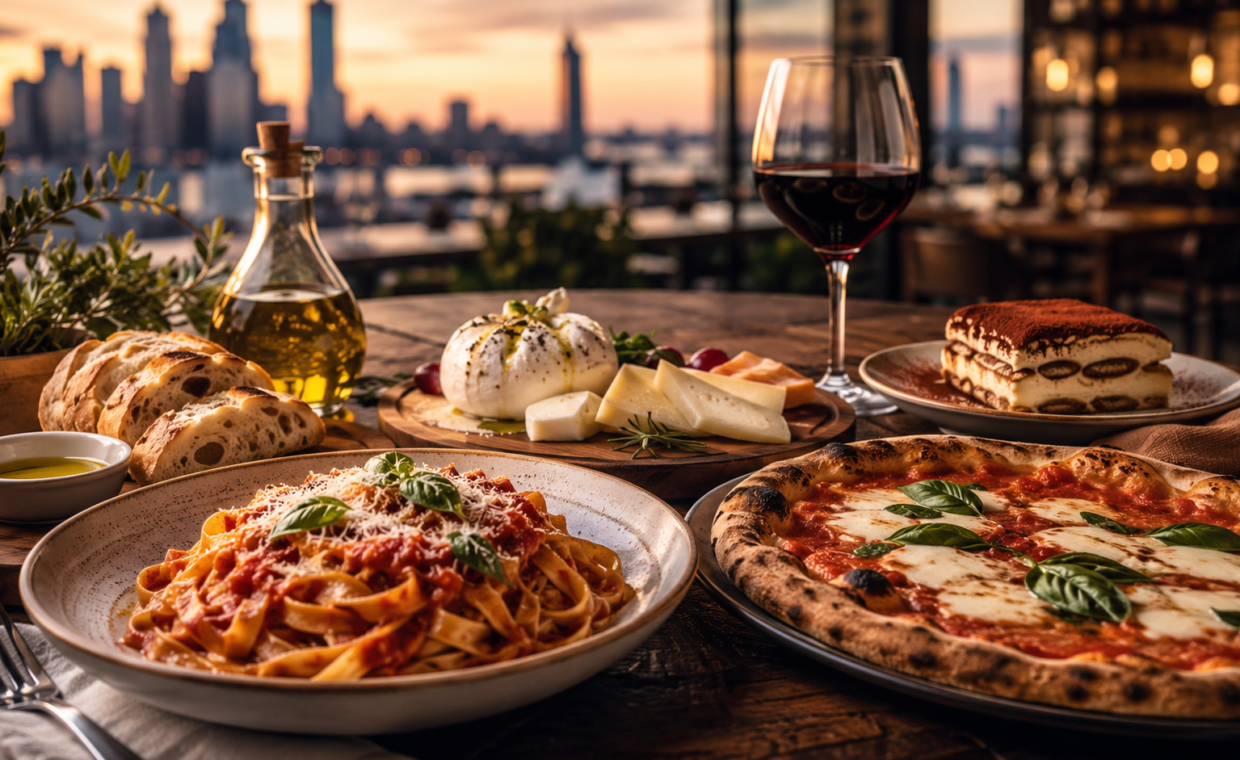
Italian cuisine is one of the most powerful food cultures in the United States. It is comfort food, celebration food, date-night food, family food, takeout food, and business food all at once. In America, Italian food lives everywhere: in neighborhood pizzerias, white-tablecloth restaurants, supermarket freezer aisles, school cafeterias, food trucks, fast-casual pasta concepts, and chef-driven restaurants built around handmade gnocchi, wood-fired pizza, burrata, and regional Italian wines.
But the story of Italian cuisine in America is much bigger than pizza and pasta. It is a story of immigration, adaptation, abundance, nostalgia, entrepreneurship, and constant reinvention.
Italian food did not simply arrive in the United States as a fixed tradition. It changed as Italian immigrants built new lives, opened grocery stores, bakeries, restaurants, and pizzerias, and adjusted old recipes to American ingredients, American portions, and American expectations. Today, Italian cuisine in the U.S. exists in two connected but different forms: traditional regional Italian cooking and Italian-American cuisine.
Both matter. Both are loved. And both continue to shape how Americans eat.
What Is Italian Cuisine?
Italian cuisine is not one single cuisine. It is a collection of regional food traditions shaped by geography, agriculture, climate, trade, history, and local identity. Northern Italy is known for dishes such as risotto, polenta, butter-based sauces, stuffed pastas, and rich meat preparations. Southern Italy is associated with tomatoes, olive oil, dried pasta, seafood, eggplant, citrus, and the flavors that later became central to many Italian-American dishes.
This regional diversity is one of the reasons Italian food travels so well. It can be rustic or refined, inexpensive or luxurious, quick-service or fine dining. A simple plate of spaghetti with tomato sauce and a tasting menu built around truffles, seafood, handmade pasta, and aged cheese can both belong to the Italian culinary world.
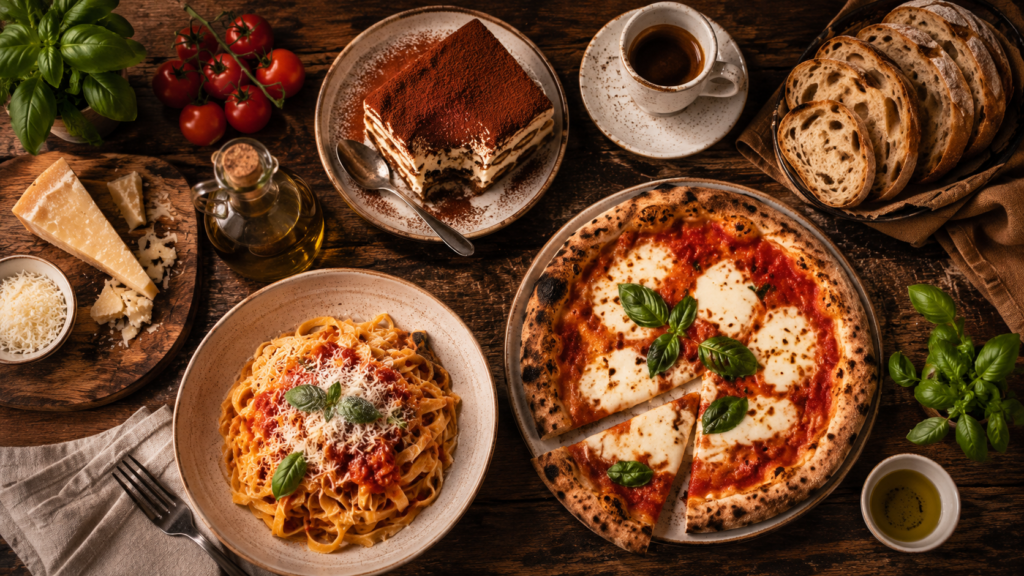
That flexibility helped Italian cuisine become a global restaurant language. In the United States, it became even more powerful because it merged with the American appetite for generous portions, family-style dining, convenience, and comfort.
How Italian Cuisine Came to America
The rise of Italian cuisine in America is closely tied to Italian immigration. According to the Library of Congress, Italian immigration increased sharply in the late 19th and early 20th centuries: about 300,000 Italians arrived in the 1880s, 600,000 in the 1890s, and more than two million in the following decade. By 1920, more than four million Italians had come to the United States.
Many Italian immigrants entered through Ellis Island, the famous immigration station that received more than 12 million immigrants during its decades of operation. For many families, New York, New Jersey, Philadelphia, Boston, Chicago, New Orleans, and San Francisco became centers of Italian-American life.
The immigrants who arrived did not all think of themselves simply as “Italian” in the modern sense. Many identified first with regions and towns: Sicilian, Neapolitan, Calabrian, Abruzzese, Genovese, Roman, or Venetian. The Library of Congress notes that people from different parts of the Italian peninsula often spoke different dialects and carried different regional identities, but in the United States they gradually became Italian Americans.
Food became one of the strongest ways to preserve identity. Bread, pasta, olive oil, cheese, wine, tomatoes, cured meats, and Sunday meals helped immigrant families stay connected to the old country while adapting to the new one.
Why Italian-American Food Became Different
One of the most important things to understand about Italian cuisine in America is that Italian-American food is not simply “fake Italian food.” It is a distinct cuisine created by immigrants and their descendants.
Many early Italian immigrants came from poorer regions where meat was limited and meals were often based on grains, vegetables, beans, bread, pasta, and preserved ingredients. In the United States, some families found greater access to meat, cheese, canned tomatoes, wheat flour, and other ingredients. That changed the way recipes developed.
This helps explain why Italian-American food often feels richer, heavier, saucier, and more abundant than many traditional Italian dishes. Meatballs became larger. Portions became bigger. Tomato sauce became central. Cheese became more generous. Dishes like chicken parmesan, baked ziti, spaghetti and meatballs, garlic bread, and Italian subs became American classics, even if they do not always match the way food is served in Italy.
That does not make them less important. In fact, it makes them historically meaningful. Italian-American cuisine reflects the immigrant experience: old-world memory mixed with new-world possibility.
Pizza: The Italian Food That Became an American Institution
No Italian dish became more American than pizza.
Pizza has roots in Naples, but the American pizza story developed through immigrant bakeries, grocery stores, coal ovens, pizzerias, delivery chains, frozen food companies, and regional styles. New York-style pizza, Chicago deep-dish, Detroit-style pizza, New Haven apizza, St. Louis-style pizza, and California artisan pizza all show how one Italian idea became many American traditions.
The Smithsonian has written about the early history of American pizza and the long-standing belief that Gennaro Lombardi, an Italian immigrant in Manhattan, helped popularize pizza commercially in the early 1900s. Over time, pizza moved far beyond Italian immigrant neighborhoods. It became one of America’s most democratic foods: affordable, shareable, customizable, and easy to deliver.
USDA dietary data shows how deeply pizza is embedded in American eating habits. A 2024 USDA report found that on any given day, about 11% of the U.S. population consumed pizza. That is not just a food preference. It is a national habit.
For restaurants, pizza remains one of the most durable concepts in foodservice because it works across so many formats: slices, delivery, dine-in, frozen retail, food trucks, stadiums, schools, bars, ghost kitchens, and premium wood-fired restaurants.
Pasta: The Heart of Italian Comfort Food in America
If pizza became the most universal Italian-American food, pasta became the emotional center of Italian dining in the United States.
Spaghetti, fettuccine Alfredo, lasagna, ravioli, penne alla vodka, baked ziti, rigatoni Bolognese, linguine with clams, cacio e pepe, and gnocchi all speak to different sides of the American relationship with Italian food. Some are rooted in Italy. Some are Italian-American. Some have been heavily adapted. But all of them offer what diners often want most: warmth, comfort, familiarity, and satisfaction.
Pasta also gives restaurant operators a strong business advantage. It can be inexpensive or premium, vegetarian or meat-based, casual or refined. It works with seasonal vegetables, seafood, cream sauces, tomato sauces, ragù, pesto, truffles, and cheese. It can be prepared in fast-casual kitchens, high-volume restaurants, fine dining operations, and catering menus.
In recent years, handmade pasta has also become a symbol of craftsmanship. Restaurants that produce pasta in-house can use it as a branding tool. Diners do not just order pasta; they order the experience of fresh dough, regional shapes, slow sauces, and visible culinary skill.
The Most Popular Italian Dishes in America
Italian cuisine in the U.S. is broad, but several dishes have become especially influential:
1. Pizza
From New York slices to Detroit-style squares, pizza is one of the strongest food categories in the American restaurant industry.
2. Spaghetti and Meatballs
This is one of the clearest examples of Italian-American adaptation. It is deeply tied to immigrant cooking, red sauce restaurants, and family-style dining.
3. Lasagna
Layered, rich, and ideal for family meals, lasagna remains a staple in restaurants, catering, prepared foods, and home kitchens.
4. Chicken Parmesan
Often served with pasta or in a sandwich, chicken parmesan is more Italian-American than traditionally Italian, but it is one of the most beloved comfort dishes in the U.S.
5. Fettuccine Alfredo
Although inspired by Rome, the American version is usually much heavier, creamier, and more indulgent than its Italian ancestor.
6. Penne alla Vodka
Vodka sauce has experienced a major comeback, helped by nostalgia, social media, and the popularity of creamy tomato-based comfort food. Recent food coverage has noted the renewed attention around penne alla vodka in the U.S. and U.K. restaurant scene.
7. Risotto
Risotto represents the northern Italian side of the cuisine and often appears in more upscale restaurants.
8. Tiramisu
This dessert has become a standard ending to Italian meals in America, balancing coffee, mascarpone, cocoa, and soft texture.
9. Italian Subs and Sandwiches
Italian-American delis helped create a sandwich culture built around cured meats, provolone, peppers, oil, vinegar, and crusty bread.
10. Burrata and Caprese
Fresh cheese, tomatoes, basil, olive oil, and simplicity have become symbols of modern Italian dining in America.
Italian Cuisine and the American Restaurant Industry
Italian food works so well in America because it fits multiple restaurant models.
A single cuisine can support:
- Independent neighborhood restaurants
- Pizzerias
- Fast-casual pasta concepts
- Italian bakeries
- Delis and sandwich shops
- Fine dining restaurants
- Wine bars
- Catering companies
- Ghost kitchens
- Frozen and prepared food brands
- Food trucks
- Family-style restaurants
- Hotel and resort restaurants
This flexibility is a major reason Italian restaurants remain strong in the U.S. IBISWorld’s industry summary lists the Italian restaurant market in the United States at $112.4 billion in 2026.
Italian cuisine also benefits from one of the strongest emotional positions in foodservice: comfort. The National Restaurant Association’s 2026 What’s Hot Culinary Forecast highlights comfort, nostalgia, wellness, value, and global flavors as major drivers of menu innovation. Italian food sits directly at the intersection of these trends. It can be nostalgic and familiar, but also global, regional, premium, and health-conscious.
The New Italian Restaurant Trend: Lighter, Regional, and More Authentic
American diners still love red sauce classics, but Italian restaurants are evolving.
A growing number of restaurants are focusing on:
- Handmade pasta
- Regional Italian menus
- Lighter sauces
- Seasonal vegetables
- Better olive oil
- Artisan cheese
- Imported flour
- Wood-fired cooking
- Natural wines
- Seafood-driven coastal dishes
- Smaller, shareable plates
- Modern Italian desserts
- Open kitchens and pasta-making stations
This shift does not replace Italian-American classics. Instead, it gives diners more options. A guest may want chicken parmesan on Friday, Neapolitan pizza on Saturday, and a refined plate of cacio e pepe or seafood risotto on Sunday.
Recent dining commentary has pointed toward “lighter, cleaner Italian” as a 2026 direction, with diners showing interest in Italian dishes that feel ingredient-focused rather than overly heavy. At the same time, nostalgia remains powerful. Yelp-related 2026 trend coverage described the rise of “nonna-stalgia,” where diners seek cozy, soulful, family-style meals that feel warm and personal.
That combination is important: the future of Italian cuisine in America is not only about authenticity. It is about emotional authenticity. Diners want food that feels real.
Italian vs. Italian-American Cuisine
One of the most common questions people ask is: What is the difference between Italian and Italian-American food?
The answer is not about which one is “better.” It is about context.
Traditional Italian cuisine is usually more regional, more restrained, and more ingredient-specific. Many dishes are built around balance, seasonality, and local tradition. Pasta portions are often smaller. Sauces are often lighter. Meat may not dominate the plate. Recipes can vary dramatically from one region to another.
Italian-American cuisine is shaped by the immigrant experience in the United States. It often uses more tomato sauce, more cheese, more meat, and larger portions. It reflects abundance, adaptation, and the restaurant culture that grew in American cities.
Examples of Italian-American dishes include:
- Spaghetti and meatballs
- Chicken parmesan
- Baked ziti
- Garlic bread
- Shrimp scampi as commonly served in the U.S.
- Italian-American wedding soup
- Meatball subs
- Sausage and peppers
- New York-style pizza
Examples of more traditional Italian dishes include:
- Cacio e pepe
- Pasta alla Norma
- Ossobuco
- Risotto alla Milanese
- Ribollita
- Orecchiette con cime di rapa
- Focaccia Genovese
- Saltimbocca alla Romana
- Bistecca alla Fiorentina
- Pasta con le sarde
For American restaurants, the opportunity is not to choose one side. The strongest concepts often understand both. They know when guests want nostalgia and when they want discovery.
Why Americans Love Italian Food
Italian cuisine succeeds in America because it offers a rare combination of qualities:
It is familiar but never boring.
It feels comforting but can also feel premium.
It works for children, families, couples, tourists, business dinners, and celebrations.
It can be inexpensive or luxurious.
It is easy to explain but difficult to master.
It supports both takeout and fine dining.
It has strong visual appeal for social media.
It can be adapted to vegetarian, seafood, gluten-free, and health-conscious menus.
Most importantly, Italian food feels personal. Many Americans have memories attached to it: Friday pizza nights, Sunday sauce, birthday dinners, first dates, family restaurants, late-night slices, wedding buffets, and holiday meals.
That emotional connection is very difficult for other cuisines to replicate at the same scale.
Regional Italian Cuisine: The Next Growth Opportunity
For restaurants and food entrepreneurs, regional Italian cuisine offers major room for growth.
Instead of building another generic “Italian restaurant,” operators can create sharper concepts around specific regions or formats:
Roman Cuisine
Cacio e pepe, carbonara, amatriciana, supplì, thin Roman pizza, and simple trattoria-style menus.
Sicilian Cuisine
Arancini, caponata, pasta alla Norma, seafood, citrus, pistachio, cannoli, and square Sicilian pizza.
Neapolitan Cuisine
Wood-fired pizza, seafood, tomatoes, mozzarella di bufala, and simple high-quality ingredients.
Tuscan Cuisine
Grilled meats, beans, rustic soups, bread, olive oil, Chianti, and bistecca alla Fiorentina.
Emilia-Romagna Cuisine
Tagliatelle al ragù, tortellini, Parmigiano Reggiano, prosciutto, balsamic vinegar, and rich handmade pasta.
Ligurian Cuisine
Pesto, focaccia, seafood, olive oil, and coastal flavors.
Puglian Cuisine
Orecchiette, burrata, olive oil, vegetables, seafood, and rustic breads.
Regional positioning gives restaurants a stronger story. It also helps with SEO, menu differentiation, staff training, and social media content. “Italian restaurant” is broad. “Roman pasta bar,” “Sicilian bakery,” or “Neapolitan pizza and wine bar” is much more memorable.
What Food Businesses Can Learn from Italian Cuisine
Italian cuisine offers several lessons for restaurants, cafes, food trucks, bakeries, and packaged food brands.
First, simplicity sells when the ingredients are strong. Many great Italian dishes are not complicated. They depend on quality tomatoes, good flour, proper cheese, fresh herbs, olive oil, and correct technique.
Second, storytelling matters. A pasta shape, a sauce, a cheese, or a regional dish becomes more valuable when guests understand where it comes from.
Third, comfort food does not have to be outdated. Italian cuisine proves that nostalgia can be modernized through better ingredients, cleaner plating, premium beverages, and regional education.
Fourth, operational flexibility is key. Pasta, pizza, sandwiches, sauces, and desserts can be adapted for dine-in, takeout, catering, delivery, and retail.
Finally, consistency is everything. Guests return to Italian restaurants because they crave a specific feeling. They want the sauce to taste the same, the pizza crust to be reliable, the pasta to be cooked correctly, and the hospitality to feel warm.
The Future of Italian Cuisine in America
Italian cuisine in America will continue to grow because it is not locked in the past. It keeps adapting.
The next generation of Italian restaurants will likely focus on regional authenticity, handmade production, lighter menus, premium casual dining, better wine programs, and stronger digital storytelling. At the same time, classic Italian-American comfort food will remain powerful because it is tied to memory, family, and American food culture.
Pizza will not disappear. Pasta will not disappear. Red sauce restaurants will not disappear. But they will continue to evolve.
The most successful Italian food businesses will understand the full story: Italy’s regional traditions, the immigrant history of Italian-American cuisine, the emotional needs of American diners, and the operational realities of modern restaurants.
Italian cuisine became part of America because it gave people something they wanted: food that feels generous, warm, flavorful, and shared. More than a century later, that promise still works.
Whether it is a perfect slice of pizza, a bowl of handmade pasta, a Sunday plate of meatballs, or a modern regional tasting menu, Italian food remains one of the strongest bridges between culture, comfort, and business in the American food world.
