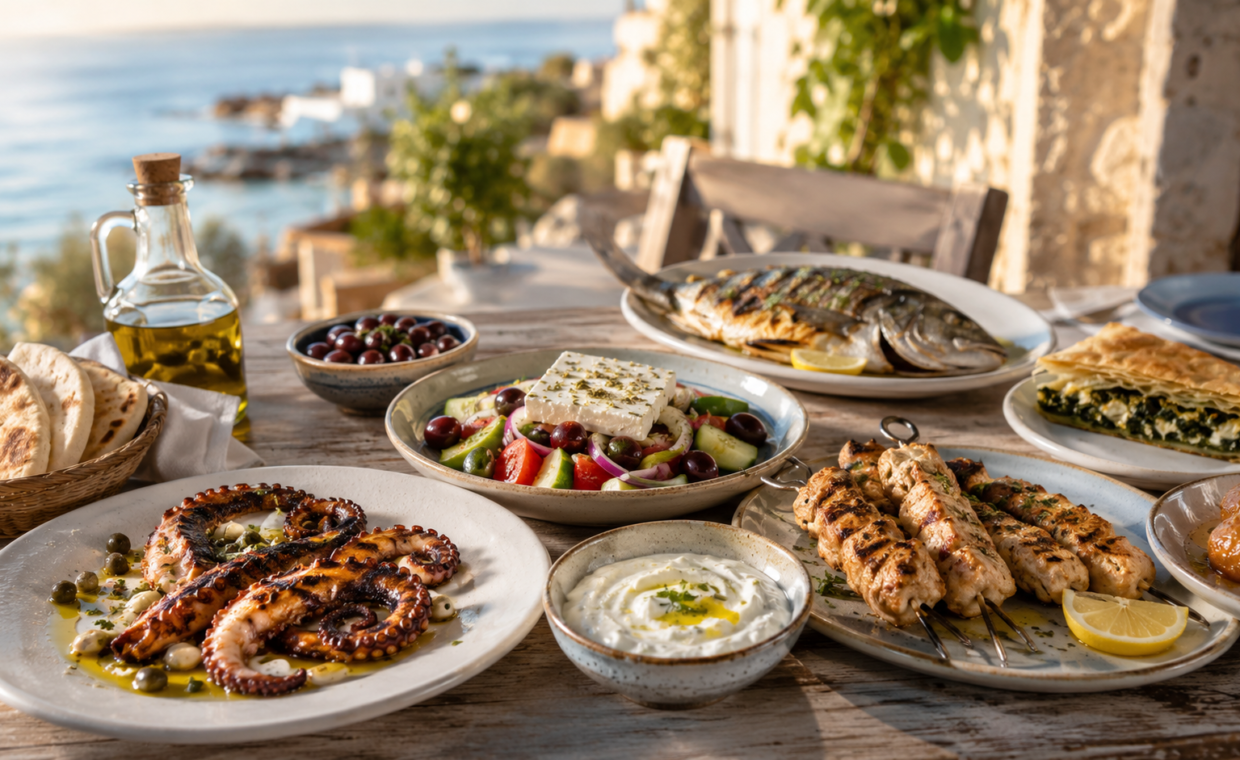
Greek cuisine is one of the clearest examples of how food culture becomes a restaurant business system.
For many American diners, Greek food is familiar through dishes like gyros, souvlaki, Greek salad, feta, tzatziki, spanakopita, grilled octopus, moussaka, baklava, and fresh seafood. But for restaurant operators, Greek cuisine is much more than a list of popular dishes.
It can become a fast-casual souvlaki shop, a full-service seafood taverna, a neighborhood Greek grill, a bakery café, a mezze-and-wine restaurant, a premium Mediterranean dining room, or a casual concept built around bowls, salads, pita, and grilled proteins.
That flexibility is what makes Greek cuisine so commercially important in the United States.
Greek food carries the health halo of the Mediterranean diet, the comfort of grilled meats and baked casseroles, the freshness of seafood and vegetables, and the social energy of shared tables. The Mediterranean diet is recognized by UNESCO as an intangible cultural heritage tradition connected not only to ingredients, but also to agriculture, cooking, sharing, and communal eating.
For Food Business USA, Greek cuisine is worth studying because it connects culture, menu design, restaurant operations, equipment planning, and guest experience in a very practical way.
Greek Cuisine Is Not One Restaurant Model
The biggest mistake is thinking of Greek cuisine as one generic Mediterranean menu.
A Greek seafood restaurant operates very differently from a gyro shop. A bakery selling spanakopita, tiropita, bougatsa, and coffee has a different rhythm from a high-end estiatorio built around whole fish and Greek wine. A fast-casual Greek bowl concept has different equipment, labor, and service needs than a traditional taverna.
That means the real question is not simply:
“Should I open a Greek restaurant?”
The better question is:
“Which Greek restaurant system am I building?”
Greek cuisine can support several distinct business models:
- Fast-casual souvlaki and gyro shop
- Full-service Greek taverna
- Seafood-focused estiatorio
- Mezze and wine restaurant
- Greek bakery café
- Mediterranean bowl and salad concept
- Premium Greek dining room
- Dessert and coffee concept
Each version has its own menu architecture, kitchen layout, equipment stack, labor model, and guest expectation.
Why Greek Cuisine Works in the U.S. Market
Greek cuisine has a strong advantage in America because it feels both familiar and specific.
Many customers already understand the broader Mediterranean category. They associate it with olive oil, fresh vegetables, grilled proteins, seafood, herbs, yogurt, legumes, and lighter eating. At the same time, Greek cuisine has recognizable signature items that give the menu identity: souvlaki, gyros, moussaka, spanakopita, tzatziki, feta, grilled octopus, saganaki, baklava, and Greek salad.
This creates a useful positioning balance.
Greek food can feel healthy without being boring.
Traditional without feeling inaccessible.
Casual without feeling cheap.
Premium without becoming overly formal.
That is why Greek restaurants can work across many price points, from quick-service pita shops to polished seafood restaurants.
New York is a useful example. Astoria, Queens has long been associated with Greek food culture, and modern Greek restaurants in NYC range from casual neighborhood spots to seafood-focused restaurants and upscale Mediterranean dining rooms. The Infatuation’s New York Greek restaurant guide notes that many of the city’s Greek restaurants are concentrated in Astoria, while Eater has tracked Greek restaurants across dishes such as spanakopita, tzatziki, grilled octopus, and more.
The Core Pillars of Greek Restaurant Operations
Most Greek restaurant concepts are built around five operational pillars:
- Grill and roasted meats
- Seafood and coastal dining
- Mezze, spreads, and cold prep
- Dough, pies, and bakery culture
- Coffee, dessert, wine, and hospitality
Understanding these pillars helps operators build a better menu, choose the right equipment, and avoid creating a concept that feels too broad or unfocused.
1. Grill, Souvlaki, Gyros, and Roasted Meats
The grill is one of the most commercially powerful parts of Greek cuisine.
Souvlaki, gyros, lamb chops, bifteki, grilled chicken, pork skewers, sausages, and mixed grill platters give Greek restaurants strong lunch, dinner, takeout, and catering potential.
This pillar works especially well for casual and fast-casual operations because it is easy for American customers to understand. A pita sandwich, rice bowl, salad bowl, or grilled platter can be built quickly and sold across multiple dayparts.
Important menu items include:
- Gyros
- Chicken souvlaki
- Pork souvlaki
- Lamb chops
- Grilled chicken platters
- Bifteki
- Greek sausage
- Pita sandwiches
- Rice bowls
- Mixed grill plates
From an equipment perspective, a grill-focused Greek restaurant may need:
- Charbroiler or grill station
- Vertical broiler for gyros
- Refrigerated prep table
- Hot holding equipment
- Rice cooker or rice warmer
- Fryer for fries and appetizers
- Pita warming station
- Prep refrigeration for proteins, sauces, and toppings
- Strong ventilation system
The key challenge is consistency. Guests may forgive a simple dining room, but they will not forgive dry meat, weak pita, watery tzatziki, or slow service during lunch rush.
2. Seafood and the Greek Taverna Model
Greek seafood restaurants have a different operating rhythm.
Instead of being built around speed, they are built around freshness, whole fish, grilled seafood, olive oil, lemon, herbs, wine, and table hospitality. This model can support higher check averages and a more polished dining experience.
Signature items may include:
- Grilled whole fish
- Branzino or sea bass
- Grilled octopus
- Shrimp dishes
- Calamari
- Seafood mezze
- Greek salad
- Lemon potatoes
- Horta
- Olive oil-based starters
Seafood-focused Greek restaurants often depend on a strong display or presentation strategy. Guests want to feel that the fish is fresh, simply prepared, and worth the price.
Important equipment and operational needs include:
- Seafood refrigeration
- Ice display or seafood holding system
- Grill or broiler
- Cold prep station
- Fish prep area
- Dishwashing capacity for full-service dining
- Wine and beverage storage
- Strong purchasing and inventory control
The risk is waste. Seafood can create excellent margins when managed well, but poor purchasing and slow movement can quickly damage profitability.
3. Mezze, Spreads, and Cold Prep
Mezze is one of the most important systems in Greek cuisine.
It allows a restaurant to create generosity, table sharing, and high perceived value before the main course arrives. It also gives operators a way to build a menu that feels abundant without relying only on expensive proteins.
Common Greek mezze and cold dishes include:
- Tzatziki
- Taramosalata
- Melitzanosalata
- Hummus-style spreads
- Skordalia
- Dolmades
- Greek salad
- Marinated olives
- Feta with olive oil and herbs
- Gigantes beans
- Grilled or marinated vegetables
Serious Eats’ Greek recipe collection highlights dishes such as walnut skordalia, chickpea stew, spinach rice, moussaka, and Greek breads, showing how Greek cuisine combines legumes, greens, grains, olive oil, dairy, and baked dishes into a broader Mediterranean system.
From an operational standpoint, mezze requires discipline. It is not just “cold appetizers.” It requires batch prep, refrigeration, portioning, garnish, holding standards, and daily freshness checks.
Useful equipment includes:
- Cold prep tables
- Reach-in refrigeration
- Food processors
- Vegetable prep tools
- Ingredient bins
- Smallwares for portioning
- Display bowls and servingware
- Undercounter refrigeration near the line
Mezze is also important for guest experience. It encourages sharing, increases table engagement, and helps a Greek restaurant feel more generous and social.
4. Dough, Pies, and Greek Bakery Culture
Greek cuisine has a strong bakery and pastry identity.
This is where many American operators underestimate the category. Greek food is not only grilled meat and salad. It also includes phyllo pies, breads, sweet pastries, cookies, and coffee-shop items that can support daytime traffic.
Important items include:
- Spanakopita
- Tiropita
- Bougatsa
- Pita breads
- Lagana
- Tsoureki
- Baklava
- Koulourakia
- Galaktoboureko
- Loukoumades
The travel-focused Greek food article from One Girl Whole World highlights widely recognized dishes such as moussaka, zucchini fritters, tomato fritters, Greek salads, seafood, and pastries as part of the visitor experience in Greece, which is useful for understanding what American travelers may already associate with Greek food.
A Greek bakery café can be a strong business model because it does not depend only on dinner. It can generate morning, lunch, afternoon coffee, dessert, and takeout traffic.
Equipment needs may include:
- Dough mixer
- Prep tables
- Sheet pan racks
- Convection oven or deck oven
- Refrigerated pastry storage
- Display cases
- Coffee equipment
- Packaging station
- Smallwares for phyllo and pastry handling
This model works best when the display is visually strong. Greek pies and pastries sell with the eyes before they sell through description.
5. Coffee, Dessert, Wine, and Hospitality
Greek hospitality is a major part of the restaurant experience.
The meal is not only about eating. It is about sitting, sharing, talking, drinking, and extending the table. That can be expressed through Greek coffee, wine, ouzo, dessert, or simply the rhythm of service.
Important items include:
- Greek coffee
- Frappe
- Freddo espresso
- Freddo cappuccino
- Baklava
- Loukoumades
- Galaktoboureko
- Yogurt with honey
- Greek wine
- Ouzo service where appropriate
For a restaurant operator, this pillar matters because it can increase average check and create a stronger memory. Dessert and coffee can turn a basic meal into a complete Greek dining experience.
Equipment and service needs may include:
- Espresso machine
- Greek coffee tools
- Dessert display case
- Refrigerated dessert storage
- Bar refrigeration
- Wine storage
- Glassware and dessert serviceware
- Packaging for sweets and pastries
Greek cuisine has a strong “linger” factor when the dining room is designed correctly. That can be an advantage for full-service concepts, but it must be priced properly. Long table time without enough check average can hurt revenue.
Regional Greek Cuisine: Why It Matters
Greek cuisine changes significantly by region.
A serious Greek restaurant does not need to represent every region, but it should understand which identity it is borrowing from.
The Islands
Island cooking is often associated with seafood, grilled fish, lemon, herbs, olive oil, capers, tomatoes, and simple preparations.
This lens is useful for seafood restaurants, coastal concepts, and premium Mediterranean dining.
Athens and Urban Taverna Culture
Athens-style restaurant identity can support a broad menu: grilled meats, mezze, salads, seafood, pies, wine, and casual social dining.
This is a flexible model for full-service restaurants.
Northern Greece
Northern Greek food can include heartier meat dishes, pies, dairy, preserves, and influences from the Balkans and the wider region.
This can support a more rustic or comfort-driven menu.
Crete
Cretan food is especially important because it is strongly associated with the Mediterranean diet and the use of olive oil, greens, legumes, herbs, seafood, and simple seasonal ingredients.
The Embassy of Greece notes the importance of the Greek Mediterranean diet and its UNESCO recognition, connecting Greek food culture to history, agriculture, and lifestyle.
Thessaloniki and Bakery Culture
Thessaloniki is useful for thinking about Greek bakery cafés, sweets, savory pies, coffee, and all-day food culture.
This is a strong reference point for operators interested in daytime traffic and display-driven food sales.
Strong Greek Restaurant Concept Types
A good Greek restaurant should have a clear center of gravity.
The menu can be broad, but the business model should be focused.
1. Fast-Casual Souvlaki and Gyro Shop
This model is built around speed, volume, and familiarity.
The core menu usually includes gyros, souvlaki, pita sandwiches, bowls, salads, fries, dips, and simple desserts.
Best for:
- Lunch traffic
- Takeout and delivery
- Office areas
- College towns
- Food halls
- Multi-unit expansion
Main risk:
If the food feels too generic, the restaurant competes only on price and convenience.
2. Full-Service Greek Taverna
A taverna is built around shared plates, grilled meats, seafood, salads, wine, and warm hospitality.
This model works well in neighborhoods where guests want a relaxed but complete dining experience.
Best for:
- Dinner
- Families
- Groups
- Neighborhood regulars
- Shared plates
- Wine and dessert sales
Main risk:
The menu can become too large and operationally difficult.
3. Greek Seafood Estiatorio
This model is more polished and often higher priced.
It is built around whole fish, seafood, olive oil, lemon, wine, and a cleaner coastal identity.
Best for:
- Premium dining
- Business dinners
- Date nights
- Waterfront or upscale neighborhoods
- Higher average checks
Main risk:
Seafood purchasing and inventory control must be excellent.
4. Greek Bakery Café
This model is built around pastries, savory pies, coffee, breakfast, lunch, and dessert.
It can create repeat traffic throughout the day.
Best for:
- Morning traffic
- Coffee sales
- Grab-and-go
- Pastry display
- Neighborhood retail
- Catering
Main risk:
Production and display freshness must be consistent every day.
5. Mezze and Wine Bar
This model is built around small plates, dips, seafood bites, vegetables, cheese, wine, and slower social dining.
Best for:
- Evening traffic
- Shared plates
- Wine programs
- Urban neighborhoods
- Smaller kitchens
- Higher margin appetizers
Main risk:
Portions, pricing, and pacing need to be carefully engineered.
6. Greek-Mediterranean Bowl Concept
This is the most modern fast-casual version.
It uses Greek flavors in a customizable format: greens, rice, pita, grilled proteins, dips, vegetables, sauces, and toppings.
Best for:
- Health-conscious customers
- Lunch traffic
- Delivery
- Multi-unit potential
- Simple kitchen systems
Main risk:
It may lose cultural identity if the menu becomes too generic.
Menu Architecture for a Greek Restaurant
A strong Greek menu should be easy to understand but not shallow.
The best structure depends on the concept.
For a Souvlaki Shop
Suggested menu structure:
- Pita sandwiches
- Souvlaki skewers
- Gyros
- Rice bowls
- Greek salads
- Fries and sides
- Dips
- Desserts
- Beverages
For a Full-Service Taverna
Suggested menu structure:
- Cold mezze
- Hot mezze
- Salads
- Grilled meats
- Seafood
- Traditional baked dishes
- Sides
- Desserts
- Coffee and wine
For a Seafood Estiatorio
Suggested menu structure:
- Raw or chilled seafood
- Cold mezze
- Grilled octopus and calamari
- Whole fish
- Seafood entrées
- Vegetable sides
- Greek wines
- Light desserts
For a Bakery Café
Suggested menu structure:
- Savory pies
- Breakfast pastries
- Breads
- Greek coffee drinks
- Sandwiches
- Desserts
- Packaged sweets
- Catering trays
Equipment Planning for Greek Cuisine
Equipment planning should begin with the restaurant model.
A gyro shop, seafood restaurant, bakery café, and mezze bar do not need the same kitchen.
Grill and Gyro Equipment
For meat-focused concepts:
- Vertical broiler
- Charbroiler
- Flat top or griddle
- Fryer
- Hot holding
- Rice warmer
- Refrigerated prep table
- Hood system
- Pita warmer
Seafood Equipment
For seafood-focused concepts:
- Fish refrigeration
- Ice display
- Grill or broiler
- Cold prep station
- Prep sink
- Strong dishwashing capacity
- Wine refrigeration
- Inventory management system
Cold Mezze Equipment
For mezze-heavy concepts:
- Reach-in refrigerators
- Prep tables
- Food processors
- Vegetable prep tools
- Portioning containers
- Undercounter refrigeration
- Servingware storage
Bakery and Pastry Equipment
For bakery cafés:
- Convection oven
- Deck oven
- Dough mixer
- Sheet pan racks
- Refrigerated display case
- Pastry prep tables
- Packaging station
- Coffee equipment
Beverage and Dessert Equipment
For full-service and café concepts:
- Espresso machine
- Greek coffee tools
- Dessert display case
- Bar refrigeration
- Wine storage
- Glassware storage
- POS and counter-service setup if café-focused
What Makes Greek Cuisine Hard to Execute
Greek cuisine looks simple, but that simplicity can be difficult.
The food depends on freshness, balance, and restraint. If ingredients are weak, there is nowhere to hide.
Common challenges include:
- Keeping grilled meats juicy
- Managing seafood freshness
- Making dips and spreads taste fresh every day
- Avoiding an oversized menu
- Maintaining pastry quality
- Pricing shared plates correctly
- Training staff to explain Greek dishes
- Balancing authenticity with American guest expectations
- Differentiating from generic Mediterranean concepts
The biggest danger is becoming a restaurant that serves “Mediterranean-style food” without a clear Greek point of view.
The strongest Greek restaurants usually know exactly what they are: a souvlaki shop, a seafood taverna, a bakery café, a mezze restaurant, or a polished Greek dining room.
Greek Cuisine and the American Restaurant Opportunity
Greek cuisine fits several major American dining trends:
- Interest in Mediterranean food
- Demand for grilled proteins
- Growth of bowl and salad formats
- Fresh seafood positioning
- Shareable dining
- Health-conscious menu language
- Bakery café traffic
- Coffee and dessert culture
- Fast-casual expansion potential
The National Restaurant Association’s 2026 State of the Restaurant Industry report highlights the importance of operations, workforce, economic pressure, and menu trends across the restaurant sector, which makes concept clarity and efficient kitchen systems even more important for operators entering competitive cuisine categories.
Greek cuisine can work beautifully in America, but it should not be treated as a decorative theme. It should be treated as a restaurant operating system.
Best Positioning for a Greek Restaurant
The best positioning depends on the concept, but the strongest Greek restaurants usually emphasize one of these identities:
- Fresh seafood and coastal hospitality
- Fire, skewers, and casual Greek grill culture
- Mezze, wine, and shared tables
- Greek bakery, coffee, and daytime traffic
- Healthy Mediterranean bowls and salads
- Traditional taverna comfort
- Premium Greek dining with wine and whole fish
A strong positioning statement might look like:
A Greek seafood taverna built around whole fish, mezze, olive oil, wine, and warm table hospitality.
Or:
A fast-casual Greek grill serving souvlaki, gyros, bowls, salads, and house-made dips for lunch, dinner, and catering.
Or:
A Greek bakery café focused on savory pies, pastries, coffee, and neighborhood daytime traffic.
The more specific the center, the stronger the business model becomes.
